Microservices architecture offers scalability and flexibility, but it introduces complexity in communication and data consistency. NestJS provides a robust framework for managing this complexity.
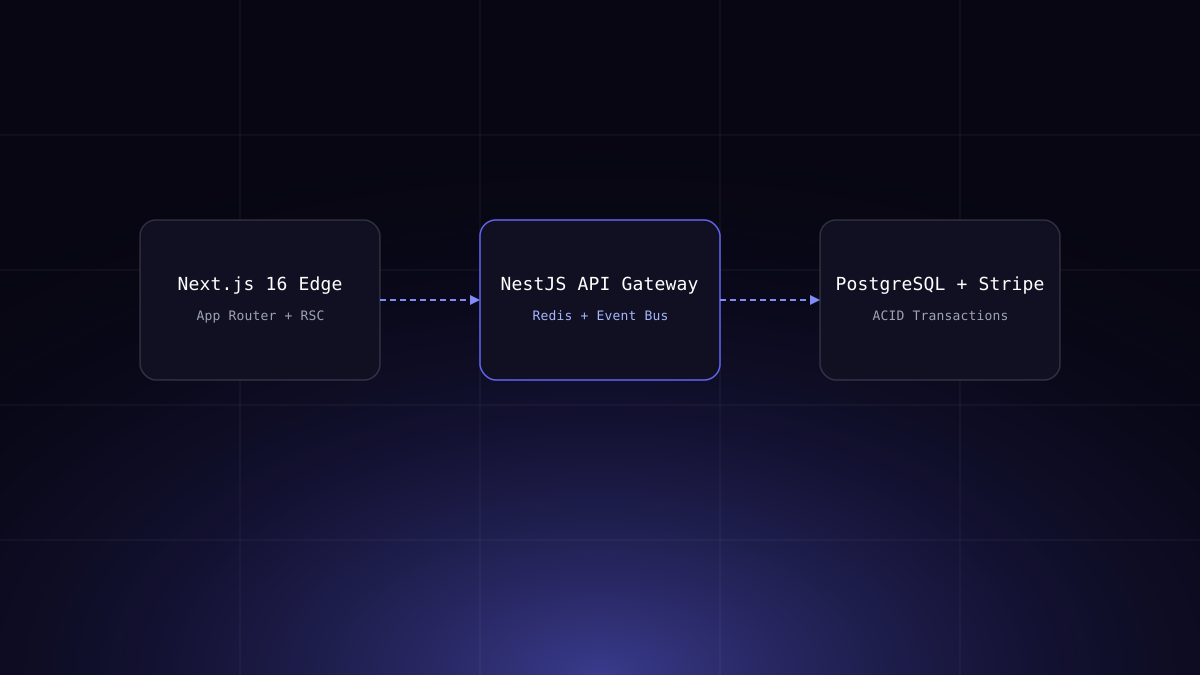 NestJS Microservices Gateway with Redis Event Bus and PostgreSQL
Why NestJS?
NestJS's modular architecture and first-class support for TypeScript make it an excellent choice for backend services. Its built-in support for various transport layers, including TCP, Redis, and RabbitMQ, simplifies inter-service communication.
// Example NestJS microservice setup
import { NestFactory } from "@nestjs/core";
import { Transport, MicroserviceOptions } from "@nestjs/microservices";
import { AppModule } from "./app.module";

async function bootstrap() {
  const app = await NestFactory.createMicroservice<MicroserviceOptions>(
    AppModule,
    {
      transport: Transport.RMQ,
      options: {
        urls: ["amqp://localhost:5672"],
        queue: "orders_queue",
        queueOptions: {
          durable: false,
        },
      },
    }
  );
  await app.listen();
}
bootstrap();
Using RabbitMQ
Message queues are essential for decoupling services. RabbitMQ is a battle-tested broker that integrates seamlessly with NestJS. Proper configuration of exchanges and queues ensures that your messages are delivered reliably.
Message Patterns
NestJS supports two primary patterns for messaging:
- Request-Response - Synchronous communication where a response is expected
- Event-Based - Fire-and-forget asynchronous events
// Event handler in NestJS
@EventPattern('order_created')
async handleOrderCreated(@Payload() data: OrderCreatedEvent) {
  await this.inventoryService.reserveItems(data.items);
}
Scaling Considerations
- Horizontal scaling - Each microservice can scale independently
- Circuit breakers - Implement fallbacks for failing services
- Distributed tracing - Use tools like Jaeger for observability
- Health checks - Monitor service health proactively